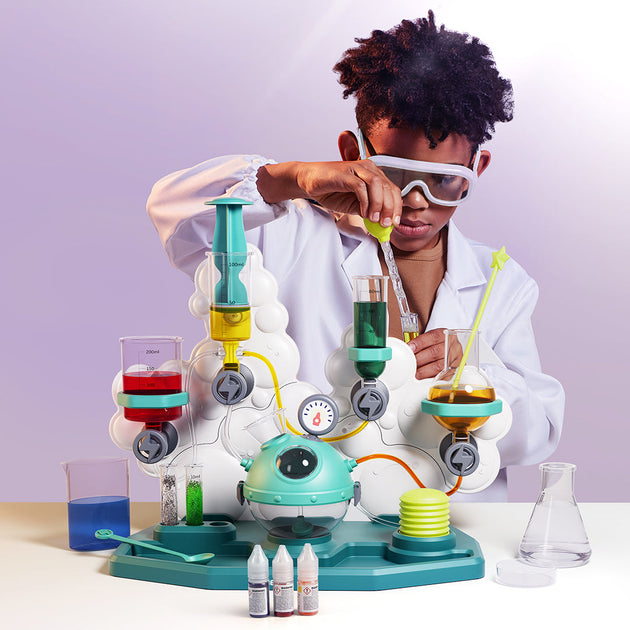
Why Chemistry Is Essential in Early STEM EducationChemistry helps children understand how the world works. From baking to weather changes, chemical reactions are part of everyday life. Introducing chemistry to kids ages 8 and up builds foundational scientific literacy and strengthens analytical thinking.At this age, children begin forming abstract reasoning skills. Hands-on chemistry activities transform complex scientific ideas into visible, exciting experiences.
The Science Behind Hands-On LearningResearch consistently shows that active learning improves retention. When children mix liquids, observe bubbling reactions, or explore surface tension, they are not just watching science. They are doing science.Hands-on chemistry experiments support:Critical thinkingProblem-solvingObservation skillsHypothesis testingSTEM confidenceInstead of memorizing facts, children develop scientific reasoning.
Why Age 8+ Is Ideal for Chemistry ExplorationBy age 8, children can:Follow multi-step instructionsUnderstand cause-and-effect relationshipsAsk deeper “why” questionsConnect experiments to real-world applicationsThis makes structured chemistry kits especially effective at this stage.
Key Types of Chemistry Experiments for KidsAcid-Base ReactionsClassic bubbling volcano experiments demonstrate how substances interact and neutralize each other.Surface Tension ActivitiesMilk, soap, and color mixing experiments show molecular behavior in a visual, engaging way.Liquid Transfer and Reaction ChainsInteractive mixing systems help children understand how compounds combine and transform.
Building Scientific Confidence Through ExperimentationConfidence grows when children:Predict outcomesTest their ideasObserve resultsAdjust and try againThis process develops resilience and curiosity. STEM education is not only about knowledge. It is about mindset.Educational chemistry kits like Chemistry Lab Fusion provide structured, guided opportunities for this kind of exploration.
Chemistry Learning at Home and in ClassroomsHands-on chemistry learning supports:Homeschool programsClassroom science enrichmentAfter-school STEM activitiesParent-child educational bondingWith safe materials and guided experiments, children can explore scientific principles responsibly.
What to Look for in a Chemistry Kit for Kids 8+When evaluating educational chemistry kits, consider:Age-appropriate designClear experiment guidesSafe materialsVariety of experiment typesFocus on scientific concepts, not just visual effectsA well-designed STEM chemistry kit should encourage thinking, not just reactions.
Original source: Topbright Toys Blog