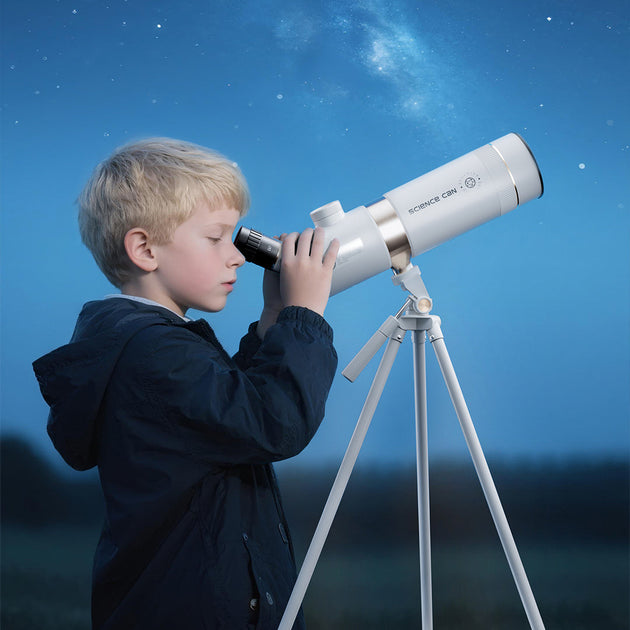
Stargazing is one of the easiest ways to turn a normal evening into a shared family moment. A beginner telescope helps kids see the Moon more clearly, learn how focusing works, and build curiosity about space without needing complicated setup.
What makes a good telescope for kids?For children and first-time users, the best telescope is one that’s simple, stable, and easy to adjust. Look for:A refractor design (straightforward and beginner-friendly)A bright objective lens (helps with clearer views of the Moon and daytime targets)A stable tripod (reduces shaking and frustration)Adjustable magnification (so you can start wide, then zoom in)
Understanding magnification (20x–60x)Magnification can be helpful, but more isn’t always better. Higher magnification makes the image larger but also dimmer and shakier if the tripod isn’t steady.A great approach is:Start at lower magnification to find the Moon or a distant landmarkIncrease magnification slowlyRefocus each time you change the zoom
Best things to look at firstBeginners get the most “wow” results from targets that are bright and easy to locate:The Moon (craters and edges are especially visible)Bright night-sky objects (depending on conditions)Daytime landscapes and wildlife (great for practice and quick success)
Simple tips for clearer viewingSet up on stable ground (avoid soft grass if it wobbles)Let the telescope sit outside for a few minutes so it matches outdoor temperatureKeep both eyes relaxed take breaks so kids don’t get tiredStart with daylight viewing first (trees/buildings) to learn focusing easily
Can you take photos through a telescope?Yes, if your telescope includes a smartphone holder, you can capture what you see through the eyepiece. Results vary by phone camera and how steady the setup is, but it’s a fun way to share discoveries or make a school project.
Original source: Topbright Toys Blog