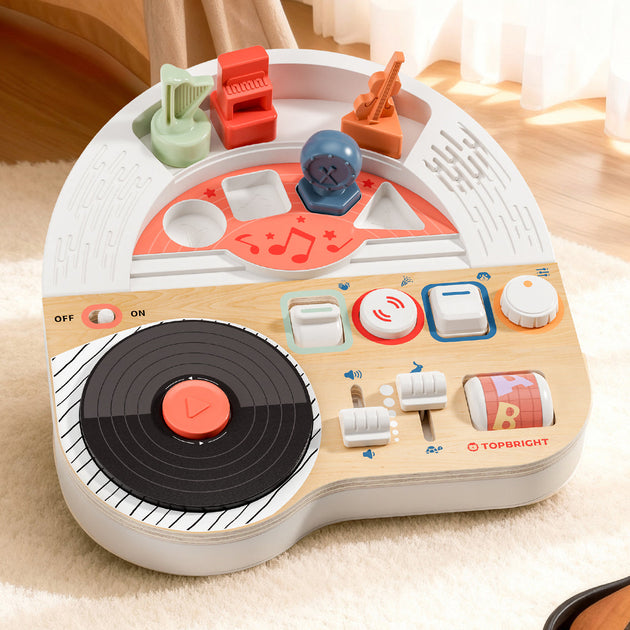
A music busy board is a hands-on activity board that lets toddlers explore buttons, knobs, sliders, and shapes while discovering sounds. Instead of passive play, kids interact, test, repeat, and learn through cause and effect. For many families, it is also a practical way to keep little hands busy with a screen-free option that still feels exciting.If you are considering a musical busy board for toddlers, here is what it helps with and what to look for before choosing one.
What is a music busy board?A music busy board is an activity board that combines sensory actions with sound play. Toddlers might press, twist, turn, pull, or slide parts to trigger tones, effects, or songs. Some models also use matching pieces so kids can place shapes into the right slots to activate different sounds.This kind of play is simple, repeatable, and rewarding, which is exactly what toddlers love.
Why toddlers love musical busy boardsToddlers are natural explorers. They learn best when they can touch and test things themselves. A toddler music activity board gives them a safe way to experiment with:Cause and effect: “When I press this, it makes a sound.”Repetition and mastery: “I can do it again, faster, slower, louder.”Sound discovery: Different tones, rhythms, and familiar tunesBecause the board offers many actions in one place, it can hold attention longer than a single-function toy.
Development benefits: more than just musicA toddler sensory busy board can support several early skills at once.Fine motor skills and finger strengthTurning knobs and sliding controls requires small, controlled movements. These are the same muscles toddlers will use for self-care tasks later, like zipping and using utensils.Hand-eye coordinationMatching shapes, placing pieces, and aiming for a slot helps toddlers coordinate what they see with what their hands do.Focus and independent playBusy boards naturally encourage “try, repeat, adjust.” That loop can build focus over time, especially when the toy offers multiple actions to explore.Listening and early music skillsDifferent sounds help toddlers notice changes in pitch, tempo, and rhythm. This supports early listening skills in a playful way.
What to look for in a music busy boardNot all music boards are the same. Here are a few practical features that matter.1) Multiple hands-on actionsLook for more than one interaction type, such as press, twist, rotate, pull, and slide. Variety keeps play fresh and supports broader fine motor practice.2) Matching and shape playA music busy board with matching pieces adds an extra layer of learning. Toddlers practice visual discrimination by finding the correct slot for each shape.3) Sound controlsVolume control is a big win for everyday use. Tempo or pitch controls add extra play value because toddlers can hear how changes affect the sound.4) Durable, kid-friendly materialsToddlers play hard. Smooth edges, sturdy construction, and reliable parts matter for daily use. Materials like wood panels paired with durable plastics are common in long-lasting designs.5) Age-appropriate designFor toddlers around 18 months and up, look for big, easy-to-grab pieces and simple cause-and-effect feedback.
A simple play routine: how to use a music busy boardIf you want to get more learning value without making it complicated, try this quick routine:Show one action, then pausePress or slide once and let your child repeat it.Name what happened“That was loud.” “That one is fast.” “That is a drum sound.”Add one challenge“Can you find the triangle slot?” “Can you make it slower?”Let them leadThe best learning often happens when toddlers feel in control of the play.Even 5 to 10 minutes like this can turn playtime into a skill-building moment.
Example: what the Music Busy Board offersThe Music Busy Board combines 14 interactive sensory activities with 4 instrument blocks (piano, violin, drum, harp). Toddlers can match shapes to trigger tones, then stack blocks to layer sounds and create their own mixes. It also includes playful sound modes and 3 classic nursery rhymes for familiar sing-along fun.Simple controls let you adjust volume and speed, plus a knob for pitch changes. It is recommended for 18 months and up, and made with beech plywood and ABS for a sturdy, everyday play experience.If you want a hands-on music toy that encourages fine motor skills, focus, and creativity, this style of activity board is a strong choice.
Original source: Topbright Toys Blog